Protect Your Business: Why Do Commercial Automated Doors Need Repair Technicians Who Are Experts?
The door to business security and operations
In today's corporate environment, the entryway to a store or office is more than just a route for people or cars to get in. It also stands for safety, professionalism, and efficiency. When the automatic door to your factory, warehouse, showroom, parking garage or apartment complex works properly, it keeps things running smoothly and protects your important things. If this door breaks down unexpectedly, it's not only a small problem; it may also be a big problem for your organisation.
A broken commercial door means supplies are delayed, manufacturing stops, clients can't get in, and most significantly, your company's security is very weak. Commercial doors are stronger, more complicated, and used more often than residential doors. So, fixing them is likewise not a normal job. You need to know a lot about commercial systems, have the necessary tools, and have specialised knowledge to do this.
In this in-depth blog post, OneLine Maintenance will explain why commercial automatic door repair needs a specialist instead of a general technician. We'll talk about the main distinctions between commercial and residential doors, point out some frequent issues with commercial doors, and explain how hiring a professional may save you time, money, and business security—all three. This article will help you choose the best option and keep your business running smoothly even when things go wrong.
Chapter 1: Residential vs. Commercial Automatic Doors: What You Need to Know About the Main Differences
A garage door may look the same at first glance, whether it's in a home or a warehouse. But they are very different from one other in terms of how they work, how they seem, and the technology they use. It is quite hard to appreciate how important mending is if you don't know what these distinctions are. Let's look at the primary things that are different.
1.1 How often and how long it lasts
Residential Doors: A normal garage door opens and closes two to four times a day. It is meant for family members to utilise on their own. This is how its parts were created.
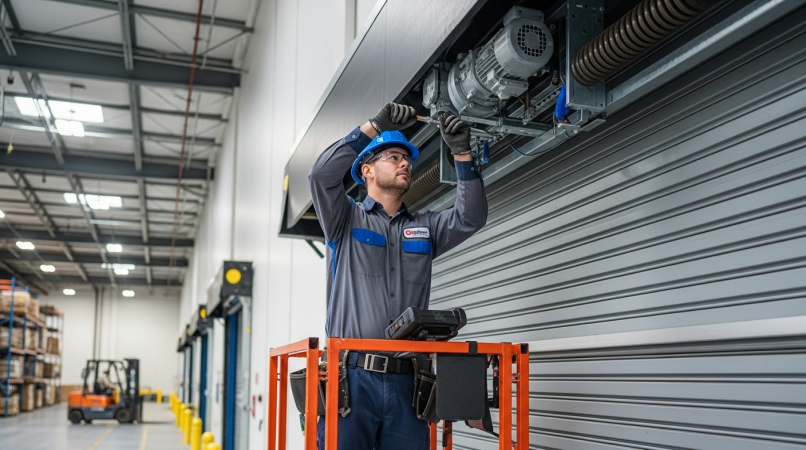
Commercial Doors: A commercial door, like the loading dock door of a busy warehouse or the entrance to a parking lot, can open and close 50, 100, or even more times a day. Commercial doors have to be very strong and long-lasting to handle this kind of heavy use. Their springs, rollers, wires, and motors are made to last through many cycles. A door for a home will wear out in a few weeks if it is utilised in a business.
1.2 The size, weight, and materials used to build it
Most residential doors are 7 to 8 feet tall and 9 to 16 feet wide. They are built of materials that aren't too heavy, including mild gauge steel, aluminium, or fibreglass.
Commercial doors can be very big, sometimes 30 feet wide and 20 feet high. This big size is needed so that trucks or forklifts may get to it easily. They are built of sturdier steel, stainless steel, or heavy-duty aluminium so that they can hold this huge structure. Because of this, they can weigh hundreds or even thousands of kilogrammes. To regulate the weight and move it securely, you need a whole other kind of system.
1.3 Strength of the Motor and Opener
Residential Openers: Most residential garage door openers have a capacity of 1/2 to 1 horsepower (HP) and are light enough to lift doors effortlessly.
business Openers: Because business doors are heavy and used a lot, their openers are significantly stronger. They usually have between 1 and 5 HP or more and require three-phase power. Commercial openers also include chain hoist gearheads and other types of control systems that residential openers don't have. This complicated motor system can't be fixed or replaced by a regular technician.
1.4 How complicated the spring system is
Residential spring: Most doors in homes include one or two sets of torsion or extension springs that are meant to keep the door balanced.
business spring: The spring system on business doors is significantly more complicated and powerful since they are so heavy. There are a lot of heavy-duty torsion springs employed here. These springs are under a lot of pressure. If you don't manage it right, it could cause catastrophic accidents or even death. You need certain tools and safety training to change or fix commercial springs.
1.5 Features for safety and security
Home security: Most residential doors include infrared safety sensors and systems that automatically reverse.
Business Security: It's incredibly vital to keep your business safe. In addition to the safety sensor, additional advanced systems are used here, such as:
- A safety edge is a thin strip on the bottom of a door that moves the door up when something touches it.
- Photo eyes are a group of infrared rays that make sure the doorway is clear.
- Locking Mechanism: A much stronger and more complicated locking mechanism to keep people from stealing things and getting in without permission.
- Fire-Rated Doors Some business doors are made to meet fire safety regulations. These doors close on their own when a fire starts and stop it from spreading. Taking care of and fixing these systems is quite specialised work.
1.6 Following the Rules
Businesses typically have to follow certain safety and building requirements, including OSHA or local laws. These rules must be followed when installing and fixing commercial doors. A trained expert knows these rules and makes sure your door fulfils all of them, which keeps your business from getting fines or having to deal with legal problems.
These changes make it evident that commercial doors are a very distinct and considerably more complicated design. Not only does trying to fix it by making it look like a residential door not work, but it can also be quite dangerous.
Chapter 2: Different kinds of commercial doors and how to fix them
Not all businesses are the same. The type of door you use depends on your business and what you need. Different types of doors have different structures, ways of working, and problems that come up when they need to be fixed. Online maintenance experts know how to fix a wide range of commercial doors. Let's look at some of the most important ones.
2.1 Steel doors with sections
These are the most frequent types of doors for businesses. They are constructed up of horizontal panels or portions that are higher than the track and run parallel to the roof. They are very common in vehicle repair shops, fire stations, and warehouses.
The repair has several features:
- Panel Replacement: You can replace just the damaged panels if only one or two are broken. You don't have to change the whole door.
- Alignment of the track: Because it is used so often, the track may be bent or the alignment may be off, which needs to be fixed.
- Cable and Roller: If you use them a lot, the cable may break or the roller may rust, and they need to be replaced for things to work smoothly.
2.2 Doors that roll or coil steel
Description: These doors have steel slats that may be rolled up into a drum on top of the door. They are perfect for small spaces or when you need the highest level of security. You can find them at parking garages, shopping malls, and storage units.
The repair has the following features:
- Repairing or replacing a slat: If a slat is bent or broken, it needs to be fixed or replaced.
- Drums and springs: The springs are inside the drum, which makes it incredibly hard and dangerous to fix. This needs a certain tool.
- Setting up the side guides correctly is important to make sure the screen slides smoothly.
2.3 Doors that open and close swiftly
High-speed doors are used in places where quick entry and exit are needed and temperature control is particularly vital, like in the pharmaceutical or cold storage sectors. They are made of light materials like fabric or vinyl and can open and close incredibly quickly, up to 100 inches per second.
There are a few things about the repair:
- Their motor and control system are very advanced. To tell if sensors, loop detectors, and timers are operating effectively, you need to know a lot about electronics.
- Breakaway feature: If these doors are hit, they come off the track and may be easily put back on. It's very important to check if this mechanism is working properly.
- Curtain Repair: You need to use special glue or heat to fix a ripped area of the curtain.
2.4 Fire-rated doors
Description: These doors are meant to keep fire from spreading. They turn off right away when there is a fire signal since they are linked to the building's fire alarm system. They are very significant in schools, hospitals, and commercial kitchens.
The repair has these things:
- Drop-testing: The legislation specifies that these doors must be "drop-tested" often to make sure they will work in an emergency. These examinations and certifications can only be done by certified technicians.
- Fusible Link and Smoke Detector: It's very important to check and fix these parts of the alarm system to make sure they work.
- Governor and Closing Mechanism: The governor determines how quickly the door closes, therefore it needs to be set up right.
2.5 Grills for Safety
Security grills are used in places like airports and shopping malls where both security and fresh air are needed. They are made of mesh and work like a door that moves.
There are a number of things about the repair:
- Link Repair: If a link in the grill is broken or bent, it needs to be fixed, which takes a long time.
- Locking system: Their locking system is often part of how the door works, which could make it hard to fix.
- Motor and track: Just like regular rolling doors, they need a lot of care for the motor and track.
For each sort of door, you need to know and be able to accomplish different things. A business door specialist who is an expert in these systems can use the necessary instruments to find and rectify problems.
Chapter 3: Typical Issues with Commercial Doors and Their Potential Origins
Commercial doors are strong, but using them all the time and making them complicated can cause a lot of difficulties. If you find the problem soon, you can prevent losing a lot of money and business. Here are some common problems and possible reasons for them.
3.1 Doors won't open or close
This is the most common and annoying condition.
Possible causes:
- Power Disconnect: First, make sure that the opener is plugged in. You can trip the circuit breaker.
- Motor failure: A portion within the motor could burn out or the gear could break.
- If the spring is broken, the motor can't lift the door's weight.
- Blocked sensor: If there is dirt, dust, or whatever else in the way of the safety sensor, the door won't close.
- The remote might be dead, or one of the lines on the switch panel might be faulty.
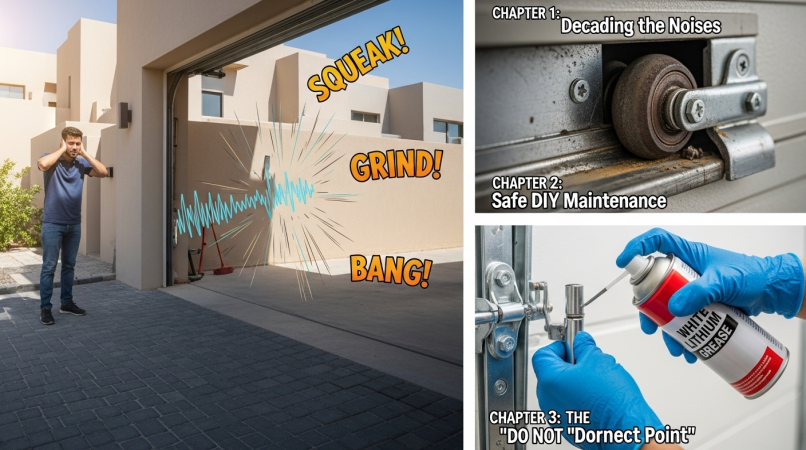
3.2 Not Quite Right Sounds While You Work
There may be a problem if the door shakes, hits something, or makes a lot of noise when it moves.
Some such reasons are:
- Not enough oil: The noise comes from friction if the rollers, springs, and hinges aren't greased all the time.
- Rollers that are rusted or damaged might cause the track rub against itself.
- Parts that are loose: Over time, knot-bolts and other hardware might break loose, making noise and shaking.
- Trouble with the spring: If the torsion spring is worn out, it might make a noise when you open or close the door.
3.3 Movement that is slow or jerky
There is an issue with the mechanism if the door doesn't move easily or moves more slowly.
There could be a few reasons:
- Problems with the track: The rollers can't travel easily when the track is bent or dusty.
- If the door springs aren't set up right, the motor could have to use more power than it needs to. This can make the door move more slowly.
- Too little grease: The door moves more slowly when the moving parts scrape against each other more.
- How old the motor is: An old motor may lose strength over time.
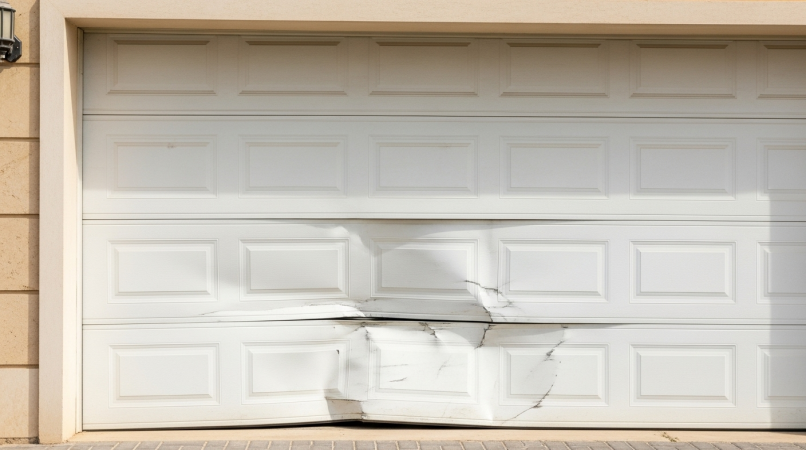
3.4 The door is not on track
This is a highly risky position. It could fall and hurt someone badly if the door hangs to one side or comes off the track.
Reasons that could be:
- Strong impact: It can happen when a forklift, truck, or other vehicle hits something.
- Broken lift cable: When the cable that holds the door up breaks, the door goes off track because there is too much pressure on the opposite side.
- Corroded Roller: If one or more rollers are broken, the door could become imbalanced and tumble off the track.
- Horizontal Track Alignment: If the horizontal track isn't lined up right, the door can come off the track when you open it.
3.5 Springs That Are Broken
This is one of the most prevalent and deadly problems with commercial doors.
Signs:
- When you try to open the door, it makes noise.
- Getting up halfway through the door and falling again, or not getting up at all.
- There is a clear space in the spring at the top of the door.
The rationale is:
- Metal Fatigue: Each spring has a certain number of cycles it may go through. As you utilise it, it gets weaker and eventually breaks down.
- Rust: Rust starts to grow in the spring when there isn't enough water and care, which makes it weaker.
Do not try to fix the broken spring on your own. This is stressful and could hurt you badly.
3.6 Problems with sensors or safety devices
If the door opens again when it is closed, the security sensor is likely broken.
There could be a few reasons:
- Damage to the sensor alignment: The door won't work until the two sensors are facing each other.
- Dirt or an object in the way: If there is dust or dirt on the sensor lens or something in its way, it will stop working.
- Broken Wiring: If the sensor wire is broken or unplugged, the system won't work.
If you ignore these issues, they could go from being a small annoyance to a big repair bill and a dangerous situation. It's a good idea to see a specialist if you have recurring difficulties and upkeep.
Chapter 4: Why do you need specialised technicians to fix commercial doors?
The next question is, why not hire a basic handyman or a home door professional to fix your commercial door? The answer is that there are big variations in knowledge, tools, safety, and abilities. It's not just a good idea to hire a specialised specialist; it's also a necessary investment for your business.
4.1 Training and technical knowledge
A licensed commercial door technician learns a lot about the many kinds of doors, complicated opener systems, and new security technology.They know how to program the control board of a high-speed door, drop-test a fire-rated door, or change the spring on a heavy rolling door securely. They know a lot about more than just mechanics; they also know a lot about electronics and automation systems.Without this information, the chances of getting the wrong diagnosis or repair are very high.
4.2 Tools and Gear
You can't fix commercial doors with just basic tools.This needs specific, heavy-duty tools. Like this:
- The right size and length of the spring winding bar is needed to turn the commercial torsion spring.If you use the wrong tools, you could get hurt badly.
- Chain hoists, forklifts, or man-lifts may be needed to safely lift and hold thousands of kilogrammes of doors.
- Welder and Cutting Tool: You might need to weld or cut metal to fix a track or make bespoke parts.
- Diagnostic Tools: New openers need multimeters and other diagnostic tools to find electronic faults.
A skilled expert brings all of these tools to the job site, which speeds up and improves the quality of the work.
4.3 Knowing the rules for safety.
Fixing a commercial door is an extremely risky undertaking. There is no space for error because of the heavy weight, tremendous spring tension, and high-voltage electricity. Specialised technicians know how to follow safety rules.They know how to lock up the work space, carefully take the weight off the door, and turn off the power. When you hire them, they will not only fix your doors, but they will also make sure that your personnel and property are safe.
4.4 Getting to parts that are made for businesses
You can't find commercial doorknobs at most hardware stores since they are very different from home doorknobs. A specialised technician talks directly to manufacturers and suppliers. In other words:
- The right parts: They can provide you the right and original (OEM) parts for your door model.
- High Quality: They employ parts that are meant for commercial usage and can handle a lot of wear.
- Fast delivery: Their network makes it easy to get the components you need promptly, which cuts down on the time your business is down.
4.5 Keeping downtime to a minimum and being efficient
In business, time is money. If the door to your loading dock is closed for a few hours or days, your supply chain can get screwed up and you could lose extra money.
- Quick diagnosis: An expert who has worked in the field before may quickly find out what's wrong, which saves time that would have been spent guessing.
- Good Repair: If they have the right tools and abilities, they can do the job quickly and correctly the first time.
- Keeping the business going: Most of the time, they can accomplish their jobs without causing too many problems for your company.
4.6 Promise and Obligation
OneLine Maintenance is a model of a reliable business that stands behinds their services with a guarantee. If issues arise after the repair, they will be held liable. They are also protected by insurance. In the event that a accident occurs during the repair process, their insurance will cover any harm caused to your property. When you collaborate with someone who lacks expertise or insurance, you shoulder all the associated riskses.
Hiring a competent door repair service is about more than simply getting the door fixed; it's also about safeguarding your investment, ensuring your safety, and alleviating any anxiety you may have.
Fifth Chapter: Cost-Effective and Risk-Free Preventative Maintenance
When it comes to commercial automatic doors, the old adage "prevention is better than cure" rings particularly true. There will be a lot of headaches for your company and a hefty bill for emergency repairs if your equipment fails abruptly. You can avoid all that hassle by following a Preventive Maintenance (PM) program.
5.1.1 How can one go about doing preventative maintenance?
In accordance with this plan, your business door will be examined, adjusted, lubricated, and tested at regular intervals. The main goal is to find and fix small problems before they become big and expensive. Online Maintenance creates maintenance plans that are unique to your company.
The Benefits of Regular Maintenance (5.2)
- Preventing unexpected problems through regular maintenance can save you time and money by as much as 90%. Your company's continued success is guaranteed by this.
- By keeping it clean and well-oiled, you may extend the life of your door and potentially get more use out of it.
- Fixing little issues, such a rusty roller or an alignment problem, at the ramp stage is a cheap way to avoid more expensive repairs later on. The motor or the track, for example, are key parts that, if ignored, can break and be expensive to repair.
- When performing regular maintenance, service technicians double-check the fire release systems, safety sensors, and auto-reverse mechanisms to ensure greater security. This manner, both your customers and employees may rest assured that your doors are secure.
- Preserving the warranty: In order for many manufacturers' warranties to remain valid, they require frequent professional maintenance.
5.3 For routine upkeep, what is a good checklist to follow?
When a maintenance specialist from Oneline Maintenance shows up, they often complete a lengthy checklist that includes:
- A visual check for rust or damage on the hardware, cables, rollers and springs as well as the tracks.
- The proper kind of oil is used to lubricate all the moving components, including rollers, hinges, springs, and chains.
- You do the balancing test by pulling the door halfway up by hand to see if it stays there. This makes sure that the spring is at the right tension.
- To adjust the hardware, you need to tighten all the nuts, bolts, and screws. They can get loose from use.
- Check the safety system to make sure the auto-reverse feature and the safety sensors are both working correctly.
- Testing the motor and opener: Testing and changing the belt or chain tension, clutch, and other settings on the motor.
- Cleaning: Getting rid of any dirt or dust on the sensors and track.
5.4 How often do you need to do maintenance?
It mostly depends on how often you use your door.
- Use it less often, like 10 to 15 times a day, once a year.
- Use it moderately (15–30 times a day) once every six months.
- Overuse (more than 30 times a day) once every three months.
Making a strategy for regular maintenance on your business is a sensible move. This will save you a lot of trouble and money in the long run.
In conclusion, pick the best partner to keep your business safe.
Your business's automatic doors are a key and significant aspect of it. It protects your property, keeps your business running smoothly, and shows that your company is professional. If this crucial instrument doesn't work right, it can have a big effect, from losing money to putting people in danger.
Based on this in-depth examination, it's evident that depending on a general technician to fix or maintain a business door is a significant error because of how complicated, heavy, and useful it is. A skilled and experienced commercial door technician is the only person who has all of the knowledge, tools, safety protocols, and access to commercial-grade parts needed for this job.
At OneLine Maintenance, we prioritise your company's safety and the uninterrupted smooth functioning of your business. Our team of qualified experts has helped many businesses in Riyadh, Jeddah, and Dammam thanks to their dependable and fast service. We offer a long-term solution to guarantee the safety of your company, rather than just mending a door.
One-Line Maintenance is available to help you with any kind of maintenance, whether it's routine checks or the installation of a new door. While the professionals handle your company's entrance, you should focus on what you do best.
Make a call to 1-line Repair without delay if your business entranceissues. Staying in business is our guarantee to you.
 WhatsApp Us