
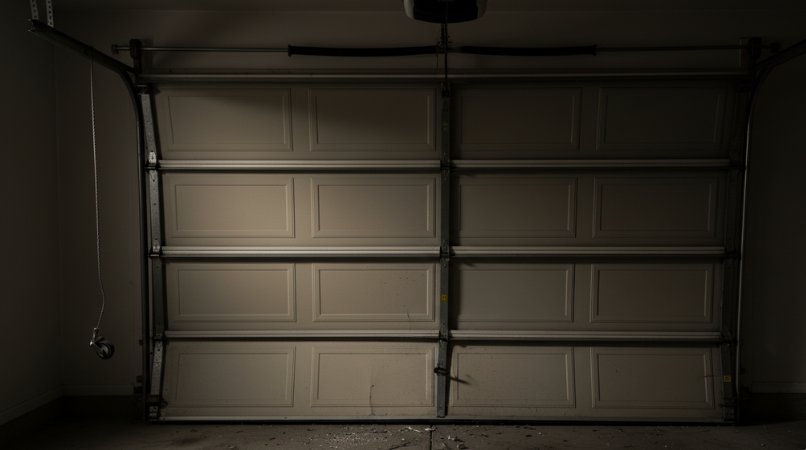
Disarming a Time Bomb with Worn-Out Garage Door Cable—Don't Ignore It!
Your home's garage door is its largest and most important structural component. You want it to open and close flawlessly every time you press a button. The question of how this massive door—weighing 150–200 kg or more—manages to remain suspended in midair has never crossed your mind.
When most people think of spring, they are somewhat correct. They store energy in the springs. However, that force is transmitted to the door and raised by two sturdy steel wires.
In terms of your garage door system, these cables are the unsung heroes. Regrettably, they constitute a portion of the system that is particularly detrimental. These wires deteriorate with age, becoming rusty and frail. Neglecting to repair a damaged cable is more than just a minor mechanical error. An impending catastrophic event is all this time bomb needs to detonate.
The garage door wires are the focus of this "Ultimate Guide" article. We'll go over why these cables are important, how to spot warning signs, how dangerous this repair is, and how AutoDoorExperts safely and expertly does this difficult job for people in Riyadh, Jeddah, and Dammam.
Chapter One: How Does a Garage Door Cable Work? How Is It Operated?
A multi-stranded steel wire connects the two primary parts of your garage door system.
- 1. The door is able to maintain its equilibrium thanks to its counterbalance mechanism, which consists of a spring.
- 2. The door panel: Typically, the brackets on the door panel's bottom are where the wires are fastened.
These wires are essential for the door's springs to function properly. The wires are the most important part since they govern the door's movement down the track and make sure it moves smoothly. There are two main varieties of cable systems that garage doors often use, which are determined by the kind of spring system:
1. The twisting spring's ropes
Among garage door systems, this is the one that is now most often seen. Straight above the door is where you'll find the torsion spring or springs fastened to a metal rod or shaft. Each end of the shaft has a cable drum. After passing around this drum, the wire ascends directly from the bracket at the base of the panel.
The wires are pulled out of the drum when the door is lowered, thanks to gravity. As the shaft is turned, the energy-saving torsion springs are "winds" or compressed by this opening mechanism. Because the springs release the energy they were storing when the door is opened, the shaft is turned upside down. This rewinds the wires, twists the drums, and neatly raises the door.
2. The extension spring's cables
They are often seen in older or less expensive installations.
Situation: The door's extension springs are "stretched" along the horizontal rails on both sides.
Approach: The wiring of this system is more intricate. Typically, a cable starts at the bottom bracket and winds its way up the door track. At one end of the spring, it is connected to a pulley system. At the beginning of the track, you may usually find an additional pulley that assists in turning the cable.
In operation, the extension springs are stretched (like a rubber band) by the weight of the closed door, which pulls the wires. When the door is opened, the springs return to their normal shape and raise the wires. Thus, the door is raised. In such setups, it is usual for a second "safety cable" to pass through the spring. In the case that the spring snaps, this safety mechanism will prevent the cable from connecting with it.
These cables are designed to withstand daily loads of stress, friction, and strain in both systems.
Second Chapter: "Time Bomb"—What is the nature of the hazard posed by a frayed wire?
Do not disregard a damaged, worn, or corroded cable; doing so may be fatal. Your loved ones, your home, and your tranquility are under grave risk; it's more than simply an annoyance.
1. The Disaster-Inspiring Door Failure
There is no worse or more dangerous possible outcome than this. The door's supporting side will abruptly become unsupported if a cable is fully severed. Next, a separate cable and mechanism transfer the door's whole weight—nearly 150 kg—to the new location. The second wire is often torn as well since it is unable to withstand such sudden and intense tension.
Can you tell me the outcomes? Like a guillotine, the whole door slammed down without a sound. No matter what you're underneath—a car, a child, a pet, or even yourself—the consequences might be devastating.
2. Violent door derailment
Before breaking, a cable often becomes strained or comes loose from its drum. At that moment, the door loses its balance immediately. It sways from side to side. As a result of the imbalanced force, the door becomes stuck at an awkward angle, deviating from its original vertical or horizontal trajectory. In addition to being completely worthless, an off-track door is also quite unstable. At any moment, it might malfunction.
3. The Cascade Effect of the Damage
You can trust your garage door to stay balanced. The failure of one component could hasten the failure of other, more expensive components.
Unfortunately, a lot of people try to use the motor to open doors that aren't even on track, which causes the opener to fail since it tries to do something it can't. The situation is analogous to trying to build a wall. Worst case scenario: this rips the chain or belt off the opener, or it burns out the motor. A very inexpensive cable repair ends up costing a big penny to replace the opener.
When stress is uneven, it might cause other components to break or bend, such as the tracks or the door panels.
Section 3: Warning Signs—How Can You Tell If You Just Need A Replacement?
Before they completely fail, cables are superb at sending out glaring signs. You may be able to prevent a devastating disaster with only a monthly distant visual inspection.
Crucial Precaution: Keep your fingers away from the cable, spring, roller, and track as you do these tests. Keep your distance from open garage doors at all times.
Wear and tear is first shown by fraying.
There is no more obvious and concerning warning sign than this. Making garage doors is as simple as winding together a large number of fine steel threads. As time passes, the friction, especially close to the drum, causes these threads to rupture and protrude like thorns from the main cable's core. Cutting a rope is a good analogy. A weaker and less stable wire will be more noticeable if you find a single torn thread. At any moment, it might malfunction.
Corrosion and rust are the second indicator.
The steel isn't very good in the dry, dusty Riyadh weather or the wet, salty air of Jeddah or Dammam. Things rub against one another when exposed to dust, and rust occurs when exposed to water. The presence of brown or reddish rust on your wires indicates a more serious problem than meets the eye. Because rust eats away at steel from the inside out, it becomes fragile and weak. The dangers of a worn-out cable and a rusty catch are equivalent.
Thirdly, sagging or loose wires are an indicator.
Ensure that both cables remain taut, similar to how guitar strings keep taut, when the garage door is completely closed. Any sign of a cable dangling, becoming loose, or peeling off its drum should be seen as a serious warning. This might mean that the spring isn't functioning properly, that the drum is damaged, or that the wire is permanently stretched.
Symptom number four is that the door is crooked or hanging loosely.
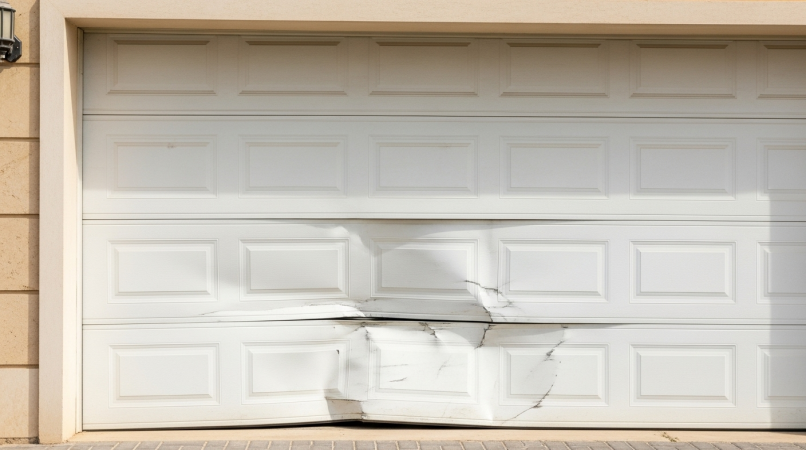
An urgent matter has arisen. Put an end to its use immediately if you notice that the door is lopsided or that, when closed, one side is higher than the other (indicating that the floor is not sealing properly). Pulling, ripping, or ripping open a cable is probably the source of this.
The sixth indicator is peculiar noises.
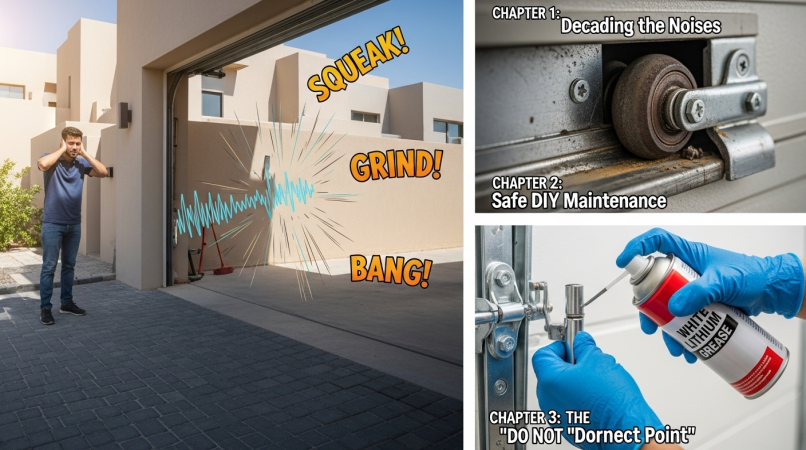
Your garage door need to be functional. Opening or closing the door while hearing noises like "popping," "bang," "scratching," or "grinding" might indicate an issue. A cable drum that isn't in alignment or a worn cable track that is grinding against it can be the cause of these sounds.
The Fourth Chapter: Why Is It Always The Professionals?
You can find several how-to guides and videos online that will teach you how to replace the cable on a garage door. The message is obvious: you shouldn't do it.
Even if you're handy around the home and can change light bulbs and put up shelves with ease, fixing a garage door cable might be a real challenge. Let me explain:
Over-Tension Hazards The real threat lies in the spring to which the wire is fastened, not only in the wire itself. The potential lifting force of a garage door can be hundreds of pounds stored in its springs. Attempting to change or replace the wires without the proper equipment and tools might cause the spring to inadvertently release its stored energy. It's as if you had command of an explosion. Severe injury or death might result from sparks, cables, or tools falling off in an instant and injuring your hands, arms, face, or chest.
Experienced technicians are aware of the "snap zone" and take precautions to avoid being in the way of potentially falling springs or cables. Any inexperienced do-it-yourselfer would be foolish to ignore this "snap zone" and risk serious injury or death.
Common tools like wrenches and pliers won't cut it; specialized equipment is required for this task. Steel winding bars of a certain diameter and length are required for torsion spring management. If you attempt to repair it with a screwdriver or any other tool, it might fall out of the spring socket and cause you serious injury.
The correct components are not uniformly easy to implement. You need to measure the door's diameter, length, and power cable to determine the ideal weight, height, and spring system. You risk ripping the wire again or disrupting the system's equilibrium if you choose the wrong one.
Because system balancing is an intricate process, it will be necessary to rebalance the whole door after its replacement. Maintaining a constant tension on both wires is essential. The door will continue to bend in any direction when the tension is somewhat different on each side. Doing so will prematurely wear out the rollers, distort the tracks, and damage the opener's gear. Training and experience are prerequisites for doing this.
Why Do Cables Break in Chapter 5? Critical elements
When cables break, there are four main causes:
- The cables are constantly being tugged and pushed every time the door opens and shuts. A garage door might see many uses per day in the always busy metropolis of Riyadh. Once the steel has been through many thousand cycles, it begins to deteriorate.
- 2. With rust and corrosion, too. The rusting process is accelerated by the salty and humid air found in Jeddah or Dammam, as mentioned above. The cable wears down quicker due to the riad dust acting as an abrasive between it and the drum.
- If your torsion spring snaps, the load on your system will immediately dissipate. As a result, the wires become unsecured and risk being tangled or ripped when they get trapped in the drum.
- If other parts fail, such a poorly functioning roller, a crooked track, or an unevenly spaced drum, the cable can be overstressed and snap at an early stage.
Using AutoDoorExperts' safe and expert method to repair cables is covered in Chapter 6.
When you encounter a damaged or worn cable, you should call an expert who can repair it safely and quickly. At AutoDoorExperts, our trained specialists use a tried-and-true method:
First, we must ensure the place is safe. Our technician has this duty as their first priority. Expert clamps or locking pliers will be used to secure them in place, preventing the door from sliding. Using the correct winding bar, they will next and most importantly release all tension from the torsion spring system.
Step 2: Thorough evaluation and diagnosis.
We go above and beyond just fixing the damaged wire. We find out why it snapped. An enormous shift has taken place. We have experts who will inspect the entire system.
- Secondary Wire: Is the secondary wire tattered and weathered?
- Regarding the springs, are there any cracks in them? Do you think they can support the door's weight?
- Have you checked the drums and seen any cracks or misalignment?
- Are the rollers broken or old? What about the tracks? Is the surface slippery?
Third Step: Switch Out Pairs.
Such behavior is expected of us in our line of work. If one cable breaks, it's likely that the other has exerted equal or even more strain and is also about to snap. To make the repair more balanced and ensure it lasts longer, we always replace both at the same time. We only use top-quality, aviation-safe, multi-strand galvanized steel wire that is rated for your door's weight.
Step 4: Testing and Perfect Balancing
Following the installation of the new wire, the system is meticulously re-tensioned. Following that, we verify that the door is perfectly balanced. When properly balanced, a half-open door will remain in the air. This prevents the garage door opener from fully lifting the door and instead ensures that it is just "guiding" it.
The fifth step is to oil the spring, roller, and hinge, as well as the whole system, once we have done lubricating and testing the repair.
Finally, we test the electric opener by opening and closing the door many times to ensure it operates silently, evenly, and smoothly.
Chapter7: Preventing a Problem from Occurring: Extending the Life of Your Cable
While cables won't last forever, they may extend their useful life significantly with proper maintenance.
- Once a month, step back and examine the wheels, cables, and springs. Look for signs of rust or corrosion.
- Expert Tune-Up: Get your vehicle checked out by a mechanic, such as AutoDoorExperts, once a year for safety checks and tune-ups. Once the system has been greased and cleaned, we will check the wires and hardware for tightness.
- Keeping the tracks clear of debris is critical for the system's proper operation and to prevent the rollers from putting undue strain on the wire and opener.
Chapter 8: Questions and their answers
Do I have a certain amount of time to work in the garage? The average lifespan of a garage door cable is eight to twelve years. However, it may not last as long if you use it often or if you live in an area with particularly harsh weather, such as Riyadh's dust or Jeddah's high humidity.
Could I perhaps obtain a single replacement? A: It's not a good idea, and no professional technician will do it, even if you can. Both of them have only completed a certain amount of cycles. As soon as a new cable is connected to an older one, the system will become unbalanced. Because of this, the door will warp, and the old cable will fray rapidly.
What is the going rate in Riyadh for a new wire for a garage door? Q: How much it will cost is dependent on several factors, including the door's size, the kind of system (torsion or extension), and the condition of any other parts. Having a cable changed is much more cost-effective than purchasing a new door or opener. At AutoDoorExperts, we always provide upfront and honest pricing before beginning any job.
Can a worn-out simply be fixed with a "urgent" I believe that is correct. Undoubtedly, yes. You never know when a wound could rip. You should immediately cease using the door and handle it as an emergency if you see any indications of wear and tear. Hire an expert to take care of it.
Last but not least, don't risk it.
A big problem is the old or damaged wiring on your garage door. Your loved ones and valuables are in grave danger from these dangerous individuals; they are like a ticking time bomb. It's not the "snap" word yet; act now.
If the door seems crooked, droops, or shows signs of wear or damage on the wires, you should immediately cease using it and get in touch with the professionals.
Customers in Riyadh, Jeddah, and Dammam can trust the professionals at AutoDoorExperts to repair their garage door cables quickly, safely, and reliably. We take extra measures to protect your family as we work to enhance your system's functionality.
If you want to put your mind at ease regarding any hazards, make sure your house is safe. Get in touch with AutoDoorExperts right away if you need help.
 WhatsApp Us