
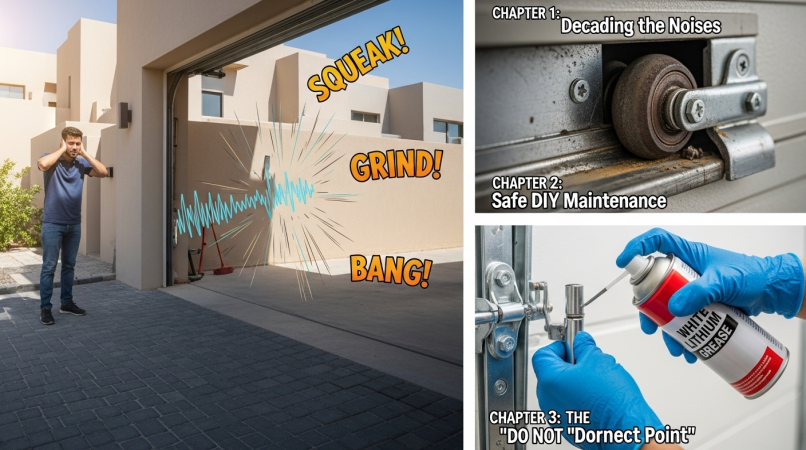
Cries, sneezes, or screams? The Reason Behind Your Garage Door Noise and a Professional Repair Guide.
Imagine, you are back home after a busy day in Riyadh. You press the button on your garage door opener, and just then there's that familiar, ear-splitting squeak. Or maybe your garage door got stuck in the middle of the morning with the sound of a loud "bang" while you were going to an emergency meeting.
These sounds aren't just annoying; they're an early warning of mechanical disturbances in your garage door. An automatic garage door is a complex system in which many moving parts, heavy panels, and high-pressure springs work together. When there is a problem in this system, it informs him through words.
In a city like Riyadh, Saudi Arabia, where dusty and hot weather is the norm, garage door parts can wear out very quickly. Dust jams the track, and the heat damages the metal or plastic parts, which becomes the main cause of the abnormal sound.
Unfortunately, many homeowners ignore these early warnings. They think, "This is a small word, nothing will happen. " But it's the word "little" that can turn a minor repair into a major, costly, and dangerous problem. A worn out roller may be causing the motor to overwork, which can eventually burn the motor out completely.
This ultimate guide is for you, the homeowners in Riyadh, who are worried about the noise of their garage door. In this guide, we will discuss in detail:
- What does this word mean? (Understand the Language of Your Door)
- Any problems can be solved by yourself (DIY).
- And you should seek professional help (such as AutoDoorExperts.com) as soon as you notice any dangerous symptoms.
Don't neglect the health of your garage door and the safety of your family. Let's find out the root cause of this problem.
Chapter 1: Decoding the Noises
When your garage door makes a noise, it's trying to talk to you. Each term refers to a specific problem. If you understand what a word means, you can take quick action.
a. Squeaking or screeching sound
And what does that sound like? A sharp, high-pitched sound like rubbing metal on metal.
Possible causes: 1. Lack of lubrication: This is the most common cause of squeaky noise. Garage doors have numerous moving parts - such as roller hinges and springs. Riyadh's dry weather and dust quickly dry out the natural lubricants in these parts. As a result, the metal begins to rub directly with the metal. 2. Worn rollers are the ones that allow the door to slide smoothly over the track. These rollers are usually made of nylon or steel. Over time, especially if not lubricated, their bearings wear out and they start getting stuck, which causes a sharp sound. 3. Bent Tracks If the track of a garage door is hit in some way (such as by a car) and it bends slightly, the rollers rub against it while moving and make a loud noise.
Do's: You can use the right lubricant as the primary solution (we will discuss this in detail in Chapter 2). But if lubricating still doesn't reduce the noise, it's probably time to change your rollers.
b. The sound of grinding or grinding
And what does that sound like? Two heavy objects rubbing against each other make a sound (such as breaking a stone).
Possible causes: 1. Dust or obstructions on the track: The dust storm in Riyadh means that sand, small stones or any other debris can accumulate on the track of your garage door. When the roller passes over this debris, it produces a friction sound. 2. Rollers off-track is a serious problem. If for some reason the roller moves slightly out of the track, it will rub against the edge of the track, which can cause serious damage to both the door panel and the track. 3. Stripped Opener Gears If the sound is coming directly from the opener motor, it is a big sign that the gears inside the motor are worn out. This usually happens when the door becomes too heavy (such as due to a broken spring) and the motor has to apply extra force.
Step 1: Check the track immediately. If it seems clear, but the sound comes from the motor, then stop using the opener. An abrasive motor can be completely destroyed by force.
c. Banging or popping sound
And what does that sound like? A very loud, sudden sound, which can sound like the sound of a gunshot.
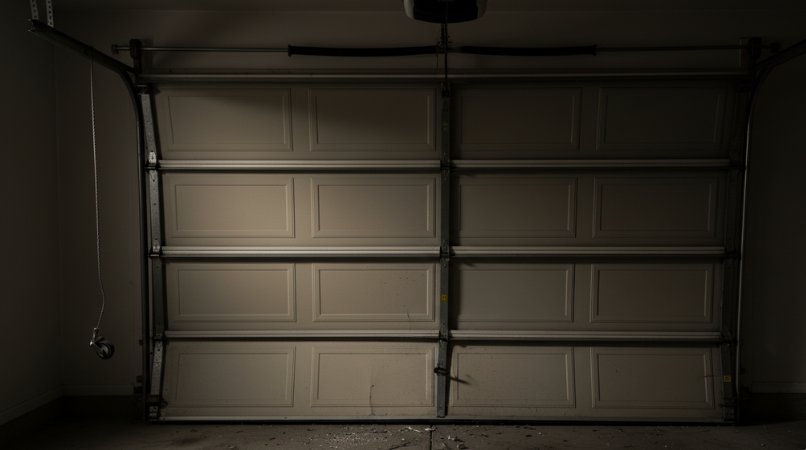
Possible causes: 1. Broken Torsion Spring is one of the most dangerous and common garage door noises. The torsion spring (or springs) is mounted on top of the door and is the main function of carrying the hundreds of pounds of weight of the door. When this spring has outlived its lifespan (usually 10,000 cycles), it breaks with tremendous force, producing a rattling "bang" sound. 2. Panel problems: If the door panels are stuck to each other without folding properly and are suddenly released, there may be a rattling sound.
Do's: If you hear such a loud noise, immediately stop using the garage door opener. Don't try to open the door. A broken spring means that the opener alone is trying to lift the weight of the entire door, which is not designed for that. It can burn the opener and the door can fall down at any moment. This is an emergency and requires immediate medical attention.
c. Rattling or vibrating sound
And what does that sound like? Constant knocking or banging on the door.
Possible causes: 1. Loose hardware: Garage doors create a lot of vibration in everyday use. As a result of this vibration, the hinge brackets and the nut-bolts holding the track are gradually loosened. It is these loose parts that make a rattling sound when the door moves. 2. Opener Chain If you have a chain-drive opener, then over time the chain can hang and make noise while moving.
This is usually a simple DIY solution. You can tighten the nut-bolts as you see for yourself (see Chapter 2).
E. Humming but the door doesn't move (Humming)
And what does that sound like? A steady humming sound comes from the opener motor when you press the button, but the door doesn't move an inch.
Possible causes: 1. Locking the door: Maybe your door has a manual lock (if any) and the motor can't open it. 2. Motor Capacitor Damage: The capacitor of the opener motor gives the initial "torque" to the motor to start. If the capacitor is destroyed, the motor will receive power but will not be able to start rotating, so it will only make a humming sound. 3. Door Stuck: Maybe the spring is broken or the roller is jammed, causing the door to be so heavy or stubby that the motor can't move it.
First of all, check the manual lock. If this is the case, it could be a mechanical or electrical problem.
Chapter 2: Easy DIY Maintenance (Which You Can Do Safely)
Many of the noises in your garage door can be solved with regular maintenance. There are some things you can do yourself (DIY-Do It Yourself) safely, which will save you money and extend the life of your door. This maintenance is even more important in the dusty environment of Riyadh.
Before you start any business, safety comes first.
Safety first: what to do before starting work
The garage door is a heavy and complex device. A little carelessness can lead to a big accident. Be sure to follow these steps:
- Close the door completely: It is dangerous to work on the door when it is open or partially open. When fully closed, the door springs are at the lowest pressure and the door is stable.
- Disconnect the power supply: Remove the power cord from the plug. If it is directly wired, then disconnect it from the main circuit breaker. This will ensure that no one can accidentally press the remote and turn on the door while working.
- Keep the door in manual mode (optional but recommended) with an emergency release cord attached to the opener. Pulling it off will cause the door to detach from the opener and go into manual mode. (Don't forget to connect it again at the end of the work).
- Use the right tools: Use a sturdy toolbox, the right size wrench or socket set, and safety goggles and gloves.
- Never touch the spring or the cable: we are saying this again, the torsion spring or the lift cable is under high tension. It is very dangerous to touch or touch them. The tasks in this chapter are limited to simple hardware and tracks.
a. The Right Way to Lubricate
The main culprit of the word cacophony is friction. And the solution to this friction is proper lubrication. But using the wrong lubricant can exacerbate the problem instead of reducing it.
Misconceptions about WD-40
Many people think that WD-40 is the solution to everything. That's a big mistake. WD-40 is basically a cleaner and rust remover it is not a long lasting lubricant. This cleanses the existing grease or oil from the moving parts and attracts more dust. If you use WD-40 in a riad environment, your door will start making more noise within a few days.
What do you use?
You'll need a specialized garage door lubricant. They usually come in two forms:
- White Lithium Grease is available in spray cans. It is excellent for long-lasting and metal parts.
- Silicone spray is also a good option, especially for plastic or nylon rollers.
Where and how to lubricate:
- Spray on the small ball bearings which are inside the metal roller. Do not spray on the wheel of the roller (which touches the track).
- Spray a little on each hinge joint or pivot point.
- Springs [Caution] You can lightly spray on the torsion spring. It prevents rust and reduces noise when the spring is compressed or stretched. But do not over-spray on the spring and be very careful when working near it.
- Opener chain (if any) If you have a chain-drive opener, you can lightly spray the lubricant on the chain. (The belt-drive opener does not require lubricant).
Where you don't lubricate:
- This is the biggest mistake. Never put grease, oil or lubricant on the track of the garage door. This will cause the rollers to "slip" instead of running smoothly, and all the dust in the riad will accumulate like glue, jamming the track. The track should always be kept clean and dry.
- Nylon rollers Modern nylon rollers usually have sealed bearings, so that no separate lubrication is required.
Method: After spraying, wipe off the excess lubricant with a clean cloth. Then the lubricant will be spread evenly to all parts if the door is lifted manually a few times.
b. Tightening and testing of hardware
With the amount of vibration that the garage door goes through every day, it is very normal for its nut-bolt to come loose. These loose hardware are the main cause of rattling sound.
What to test:
You need a socket wrench. Check each panel of the door using a ladder or ladder.
- Hinge Brackets Check the bolts of the brackets with which the hinges or hinges are attached to the door panel.
- Roller Brackets Check the brackets that hold the roller. [Warning: Do not touch the roller bracket on the bottom panel, which is connected to the lift cable. It is under high pressure. ]
- Check the bolts with which the track mounts are attached to the vertical and horizontal track walls or ceiling.
How tight will you be?
Don't be too tight. Excessive tightening can cause the fiberglass or metal of the panel to bend or damage the bolt thread. Just do the "snug fit" - until it feels resistance, then rotate a little more.
It is a good practice to test these nut-bolts twice a year (e.g., in winter and early summer) with a wrench.
c. The cleaning of the tracks
As already said, the track is not a place to lubricate, it is a place to keep clean. The dust and sand of Riyadh is the number one enemy of your garage door. This sand can accumulate in the track and become as hard as cement, which prevents the roller from moving and creates a grinding sound.
How to clean the track:
- Dry wipe: First clean the loose dust, sand and spider web from the inside of the track with an old brush or dry cloth.
- Wet wipes: Mix a little dish soap or car shampoo with warm water in a bucket. Soak a cloth in water and wipe the inside of the track.
- Complete drying: This is very important. After wiping the track, wipe the track completely dry with another dry and clean cloth. There should be no moisture inside the track, as it can rust and trap more dust.
These three simple DIY tasks - lubricating, tightening the hardware, and keeping the track clean - can eliminate most of the common noises (scratches, rattles) in your garage door. If the noise does not subside even after doing these things, or if the sound is of the grinding or banging type, then it is a sign of a deep problem.
Chapter 3: The Do Not Touch List
In the previous chapter, we discussed the maintenance tasks that you can do yourself. But there are some parts of the automatic garage door that are beyond ordinary equipment, and touching them can be not only dangerous, but also deadly.
We call these parts "The Do Not Touch List" or "Touch-Ban List." Many house owners in Riyadh, thinking of saving themselves, try to do these things on their own and get seriously injured. Remember, a broken garage door is only an inconvenience, but one wrong move can cause permanent damage to your life or health.
In this chapter, we will discuss in detail those dangerous jobs and why you should immediately call professionals like AutoDoorExperts.com-er.
a. The Most Dangerous: Broken Springs (Torsion and Extension)
If there's only one part of this whole guide you remember, it's this: Don't try to repair a broken garage door spring yourself.
What is spring and why is it so important?
Your garage door opener (motor) doesn't lift the full weight of your door - this idea is wrong. The opener only helps the door to move. The spring system carries the actual weight of the door (which can be 150 to 400 pounds or more). These springs act as a counterbalance or balance system, making the door "weightless."
There are two main types of systems:
- Torsion springs are mounted just above the door, on a metal shaft or rod. They store energy by twisting.
- Extension springs are installed on both sides of the door, parallel to the horizontal track. They stretch and store energy.
Where's the danger?
When the door is closed, these springs are at their maximum tension. They contain a quantity of stored potential energy. If a spring breaks, or if you try to open or tighten it with the wrong tool, this stored energy can explode in an instant.
- Spring opening special tools (winding bars) can fall out of your hands and hit your face, head or chest.
- Parts of the spring can be knocked out by bullets.
- If installed incorrectly, the door can suddenly fall down.
Signs of a broken spring:
- The sound of the breaking of the spring is like a gunshot, as stated in Chapter 1.
- Visible gap in the spring: If you look at the torsion spring, you will see the spring is split into two, with a gap of 2-3 inches in the middle.
- Doors do not open: When you press the opener button, the motor will try to start, humming, but the door will open only a few inches and close again. Because, without the help of the spring, it is impossible for the opener to lift the full weight of the door.
- The door suddenly becomes very heavy: If you try to open the door manually by pulling the emergency release cord, it will seem impossibly heavy.
- Loosening of the cable: When the spring breaks, the lift cables lose their tension and can hang loosely around the drum.
Why do you need to call a professional?
AutoDoorExperts.com-er technicians have experience and knowledge of the right equipment (e.g., the right size winding bar). They know how to safely release the pressure of old broken springs and install the right new spring according to the weight and size of your door. This is not a guesswork; applying the wrong spring will put extra pressure on your opener and will wear out quickly.
b. Broken or frayed cables
What does the cable do?
The lift cables are directly connected to the spring system. They start from the bottom panel of the door and are connected to the top spring (drum in case of torsion system, pulley in case of extension system). The power of the spring is transferred to the door through this cable.
Where's the danger?
These cables are also under high pressure like a spring. Over time, rust or constant friction can cause them to fray or snap.
- If a cable is torn, one side of the door will be unbalanced. The door can suddenly tilt to one side and get stuck in the track or fall down.
- If you try to touch a torn cable, its fine metal fibers can be pierced in your hand.
- To replace the cable, first of all the tension has to be released from the spring, which again takes us back to the danger of that spring.
Symptoms:
- The door is open or closed.
- You can see a loose, dangling cable next to the door.
- When you try to open the door, it gets stuck or makes a noise.
Step 1: Close the door immediately. Don't open the door at all. It's an emergency situation.
c. Motor and electrical issues.
The garage door opener or motor may seem like a simple home appliance, but it's more complicated and dangerous than that.
Where's the danger?
- The electric shock opener is directly connected to your home's mains electricity. Opening the cover means that you are in contact with live wires, circuit boards and terminals. A slight malfunction can cause a severe electric shock.
- There is a large capacitor inside the motor.Its job is to store and give the motor the main energy it needs to start.These capacitors can hold a high voltage charge for a long time, even after the plug is pulled. Even if the object is not connected in, touching it could cause serious injury.
- Complicated Mechanisms: New openers feature logic boards, sensor receivers, and complicated gear systems. If you try to fix them without knowing what you're doing, you could easily break them for good.
Signs that there's a problem with your opener:
- Burning smell: The smell of plastic or its burning from the motor.
- Humming but not moving: This could mean that a capacitor is broken or that a door is jammed, as mentioned in Chapter 1.
- The remote isn't working: If the remote still doesn't function after replacing the battery, the fault could be with the receiver or logic board.
- Phantom opening or closing of the door may indicate a fault with the logic board or a short circuit.
- The door does not fully close: This could be due to a problem with the safety sensor or the travel limit settings on the openers.
Call a skilled technician without trying to open the cover of the opener. They will be able to accurately determine whether the problem is with the motor, the logic board, or the safety sensor.
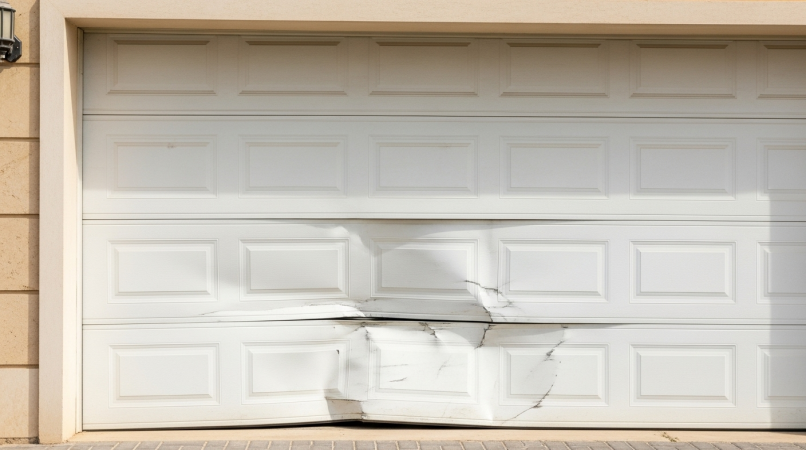
c. Off-track doors or damaged panels
How does that happen?
- Accidentally hit the door of the car.
- A roller is broken or worn out and comes off the track.
- The door hangs to one side as a result of a cable being torn.
Where's the danger?
A derailed door means that it is no longer supported. Its entire weight (300-400 pounds) hangs precariously on a few rollers or side tracks.
- Door fall: The door can fall completely off the track at any moment. If there is anything under it (cars or people), it will be crushed.
- Danger of forcing: Many people try to force the door back on the track by pressing or pushing the opener. It can't be done. This causes permanent bending of the door panels, further damage to the track, and may cause the opener's gear to break.
Replacement of broken panels:
If one panel of the door is damaged, it is also a professional task to replace it. Each panel has a specific weight. Changing a panel changes the total weight of the door, which requires re-calibrating the spring system. If this is not done, the new door will not be properly balanced.
Conclusion (Section 3)
In short, tasks that involve high pressure (springs, cables) or high voltage (motors), or that affect the door's weight balance (derailed doors), should be off your DIY list. Hearing these sounds (rattling, pounding, humming) means that your garage door is in serious danger.
When in doubt, don't take the risk. For the safety of your family in Riyadh, trust the certified technicians at AutoDoorExperts.com-er.
Chapter 4: Noise Prevention and Long-Term Solutions
In the previous chapters, we learned how to identify garage door noise (Chapter 1), what basic maintenance you can do yourself (Chapter 2), and what dangerous tasks you should call professionals for (Chapter 3).
Now, the most important question is: How can these words and problems be prevented before they begin?
The answer is: regular, professional preventive maintenance.
If a car is not serviced regularly, it sometimes breaks down on the road, just like your automatic garage door. Neglecting this, a minor lack of lubrication can turn into an expensive motor or spring replacement.
The weather in Riyadh: a silent enemy
The environment of Riyadh is particularly unfavorable for garage doors. There are two main reasons:
- Dust and sand: The fine sand from the dust storm mixes with your lubricant to form a sticky paste. This paste forms sandpaper-like abrasions on moving parts (especially rollers and hinges) and quickly corrodes the parts.
- Extreme heat: The intense heat of summer expands and compresses metal and plastic parts, which can slightly change their shape. This can damage the alignment of the track and make the nylon rollers brittle.
For this reason, professional maintenance at least once a year for homeowners in Riyadh is not a luxury, it is a necessity.
DIY vs. professional maintenance.
The DIY tasks we talked about in Chapter 2 (lubrication, track cleaning, bolt tightening) should be done every 3 to 6 months. This is primary health care.
But once a year, you need a specialist doctor. AutoDoorExperts.com-er is a technician who does more than just lubricate when it comes to maintenance. They run a multi-point inspection that nukes potential problems.
What is included in a professional inspection?
An expert technician will examine these important points, which you may want to avoid:
- The Door Balance Test
- What it is: The technician will disconnect the door from the opener (in manual mode) and release the door halfway up.
- Why it's important: A properly balanced door will stay stationary in the middle. If it falls down sharply or rises up quickly, it means that the tension of the spring is not correct.
- Result: Unbalanced doors put a lot of pressure on your opener motor. This is what can cause that "friction" or "humming" sound and eventually burn out the motor (a major danger in Chapter 3).
- Safety Sensor Alignment and Testing
- What it is: The technician will place an object (such as a piece of wood) under the doorway to see if the door automatically reverses. They will test two photo-eye sensors near the floor.
- Why it's important: The dust from the riad puts a layer on the lens of these sensors or destroys their alignment with a slight hit. A malfunctioning safety sensor can pose a serious danger to your car, pets, or family members.
- The force-setting test
- What it is: The opener has a setting that determines how much force the door will exert when it hits an obstacle and when it will reverse. The technician will test and adjust it.
- Why it's important: The wrong setting may cause the door to reverse slightly, or it may not stop even after hitting something hard.
- Cable, Roller and Hardware Inspection:
- The technician will carefully examine the lift cables to see if there is any rust or fraying, which is a precursor to the cable being torn.
- They will check each roller to see if there are any cracks in them or if they are rotating smoothly.
Long-term upgrades to reduce noise
If your door is old and still making noise after basic maintenance, it's time to consider some upgrades:
- Installation of nylon rollers.
- Most old doors have cheap metal (steel) rollers, which do not have any bearings. These are the main reasons for the rattling sound in the track.
- Solution: Upgrade to a nylon roller with sealed ball-bearings. The nylon glides almost silently on the metal track. It can reduce the noise of your garage door by up to 70-80%, and they also have a much longer life than metal rollers.
- The belt-drive opener
- If your opener is an older chain-drive model, it will naturally make a lot of noise (like a bicycle chain).
- Solution: Upgrading to a belt-drive opener. They use a rubber belt, which works almost whisper-quiet. If you have a bedroom next to your garage, this upgrade will bring peace back into your life.
In short, the best way to prevent noise is to be proactive or pre-emptive. Don't let the sound of a small creak on your door turn into a big "bang." Book an annual maintenance visit today for the longevity of your garage door in Riyadh and your peace of mind.
Conclusion: When the Word Warns
We started this long guide with a simple, annoying sound - maybe a scratch, a tingle, or an abrasive sound. On this 6,000-word journey, we've taken a deep dive and learned that these words aren't just annoyances; they're urgent warnings from your automated garage door.
We learned how to understand the 'language' of each word (Chapter 1). A squeaky sound may indicate a lack of lubrication, which is a simple solution. "But a loud" "bang" "or" "bang" "signals a serious danger, such as a broken torsion spring, that requires immediate professional attention."
We've shown you some simple DIY maintenance tasks (Chapter 2) that you can do yourself safely. Keeping track clean in Riyadh's dusty environment, using the right lubricants (and avoiding WD-40), and tightening loose nuts and bolts can greatly extend the life of your door.
"Most importantly, we have unambiguously identified that" "touch-ban" "list (Chapter 3)." The high-pressure spring, the lift cable and the complex electrical parts of the motor are reserved for professionals. The risk of trying to work on these parts yourself is much more valuable than your desire to save money - it's a risk to your life and health.
And finally, we discussed how regular preventive maintenance (Chapter 4) can solve all these problems before they start. An annual professional inspection ensures the balance of your door, the safety sensor and the health of the motor, saving you from major costs and hassles in the future.
Your automatic garage door is probably the largest and heaviest moving machine in your home. Neglecting its health and safety means putting at risk the safety of your car, your assets and, above all, your family.
If in doubt, don't take the risk. Do not wait for a big, expensive and dangerous disaster by neglecting a small sound.
The next step is AutoDoor. call to com.
Is the sound of your garage door keeping you up at night? Are you afraid of getting stuck in front of an unlocked door in the sweltering heat of Riyadh?
AutoDoorExperts.com-ed We don't just repair doors; we bring peace of mind back into the lives of Riyadh homeowners.
Our team of certified, trained, and experienced technicians are ready to get to any part of Riyadh quickly - whether it's a simple noise reduction lubrication service, an emergency broken spring replacement, or a derailed door brought back to its place safely.
We are committed to providing transparent pricing, fast service, and a one-year warranty on all of our work.
Don't ignore the word anymore. Don't let the small noise of your garage door turn into a major accident.
Sign up for a visit today:
- To book online: visit our service page https://autodoorexperts.com/
- For emergency services, or to speak directly: call us [your phone number is 0500649613
AutoDoorExperts.com - the key to your reliable, fast and safe garage door solution in Riyadh.
 WhatsApp Us